Training volley balls

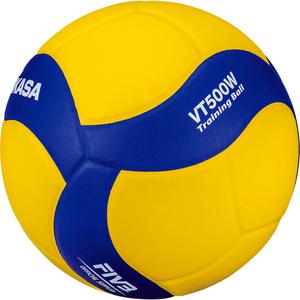


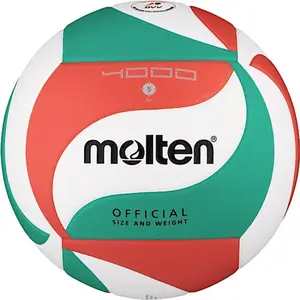
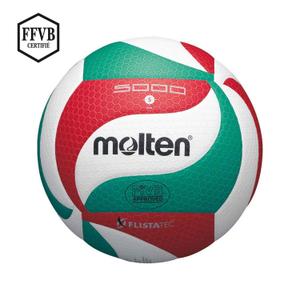


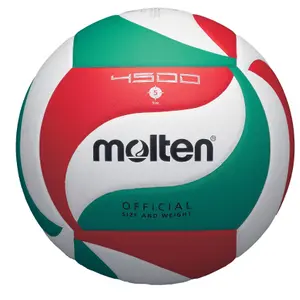
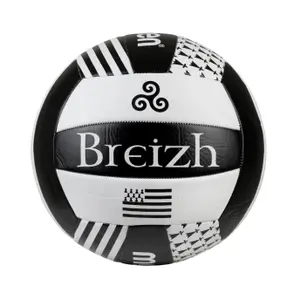
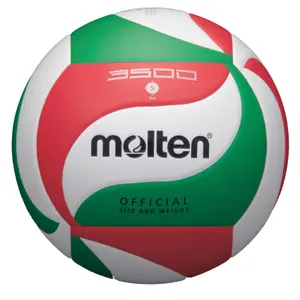
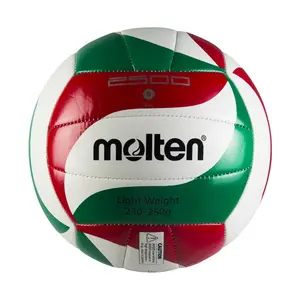
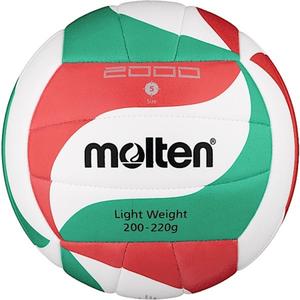
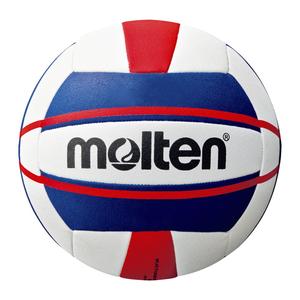
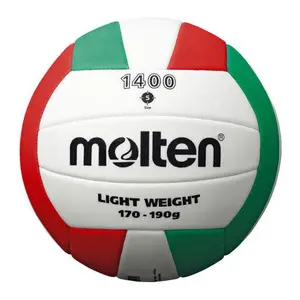
Twenty minutes of hitting against the wall, passes in triangle, then a series of serves: in volleyball training, the ball takes far more hits than on a match night.
This page brings together the balls that withstand these sessions, from club models to lighter balls for young players, including educational and foam balls for beginners.
In club practice: a ball that holds up to repetition
A training ball must maintain its shape and pressure after hundreds of strikes. Session models, like the Molten V5M3500, are designed for this repeated use. Many clubs mix these training balls with a few match balls so that players can regain the feel of competition at the end of training.
Youths and teens: lighter balls
Children progress faster with a lighter ball: a high pass becomes possible without straining the fingers, and the forearm pass hurts less. At Molten, the V5M2501-L and V5M2000-L maintain size 5 while being lighter. The Mikasa V345W is marketed as a children's ball. For younger kids, a size 4 ball further reduces the difficulty.
School and initiation: educational balls and foam balls
For a first experience, whether in primary school or a leisure centre, a competition ball is not suitable. Sporti France offers educational and introductory balls, as well as a foam ball measuring nineteen centimetres that is non-threatening. Tremblay CT rounds things off with the Scol Volley, the Training Volley, and the Finger Volley, designed for schools.
Mini-balls and leisure balls
The mini-ball OPTX AVP from Wilson is used to work on precision or to play between sessions. Leisure balls, which are more forgiving, are suitable for improvised games outdoors. They also make their way into the coach's bag who leads a fun warm-up.
Brands of training balls
- Molten: V5M3500 and lighter versions for volley schools.
- Mikasa: the VT500W, the V300W AT TR, and the V345W, marketed as a children's ball.
- Wilson: the mini-ball OPTX AVP and sand balls.
- Nike: a few balls complete the offering.
- Softee and Out2Play round out the selection.
The other types of balls and good deals
For the beach, beach-volley balls have their own page, and competition balls gather the match models. To equip a club without breaking the bank, check out the special ball offers, the ball clearance, and the ball sales.
Frequently asked questions
What’s the difference between a training ball and a match ball?
The match ball focuses on accuracy and consistency, often with glued panels and high-quality covering. The training ball prioritizes durability and tolerance. Many clubs use both during the same session.
At what age should one switch to a standard volley ball?
There is no fixed age; it depends on the size and level. A teen who masters the forearm pass and the set can switch to a lighter size 5 ball, then to the standard ball. If forearms turn red after each session, the ball is still too hard.
Does a foam ball really help with volley?
Yes, for very young players and for initial sessions. It slows the ball down and reassures children who are afraid of the ball. It allows for practicing positioning before moving on to a real ball.
How do you check the pressure of a training ball?
The most reliable method is a manometer, set to the value marked near the valve. If that's not available, drop the ball from a fixed height and compare its bounce to others. A poorly inflated ball skews the feeling and wears out faster.
Can a training ball be used outdoors?
A versatile or leisure model can handle outdoor play on a clean surface. Avoid rough areas with a glued-panel ball, as it wears out quickly. After the session, wipe it down and let it dry in the shade.