Inflation: balloon pumps and needles




A ball that's too soft tires out the forearms during the serve and messes with the trajectory, while a ball that's too hard hurts the setter's fingers: inflation is adjusted before each session, and you'll need a tool for it.
The page gathers hand pumps, double action pumps, and replacement needles, suitable for volleyball, beach, and other ball sports.
Hand pump or double action pump
The classic hand pump blows air when you push. Small, it fits in a bag pocket. The double action pump, like the one from Kempa, inflates when pushing and pulling, which halves the effort for a well-deflated ball. For a club that inflates several balls before each training session, the time saved is significant.
Pressure: reading the ball valve
The recommended pressure is printed on the ball, near the valve. Stick to it: an indoor volleyball and a beach ball don't inflate the same way. Without a pressure gauge, the bounce test or thumb pressure gives an indication, but it remains approximate. Check the pressure at every session, a ball always loses a bit of air.
The needle: the little accessory you always lose
The needle screws onto the pump and fits into the valve. It twists or gets lost easily, which is why it's a good idea to keep a few in your bag. Wet it before inserting, and make sure to insert it straight to avoid damaging the valve.
Hummel, Uhlsport, Nike: the brands on this page
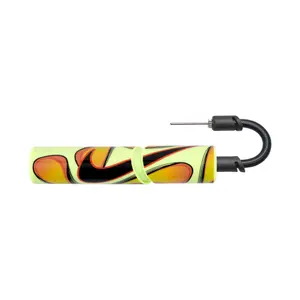
Hummel offers a simple and compact ball pump at the top of the page. Uhlsport has both a small and a large pump depending on the volume of balls. Nike features the Essential pump, in several bright colours. Erima provides a hand pump for bags. Kempa offers its double action pump, and Sporti rounds it off with budget models.
For a club: the coach's bag
A coach needs a sturdy pump, spare needles, and ideally, a pressure gauge to check the balls before the match. The double action pump saves time on a whole set of balls. A small backup pump in the match bag prevents unpleasant surprises while on the move.
Bottles, towels, headbands: other accessories
To complete the bag, bottles and towels have their own page, as do headbands and elastics. All accessories are gathered on the accessories page.
A pump at a low price
The special equipment offers group discounted gear. To renew the balls at the same time, check the special ball offers, and in winter the equipment sales.
Frequently asked questions
Does a football pump work for a volleyball?
Yes, the valves and needles are standard on most balls. The only difference is the pressure to reach, which is lower for volleyball. Always read the value printed on the ball.
What pressure should you inflate a volleyball to?
An indoor ball inflates around 0.3 bar, a beach ball significantly less, between 0.18 and 0.22 bar approximately. The exact value is printed near the valve. An over-inflated ball bounces very high: deflate it a little at a time with the needle.
Should you wet the needle before inflating?
Yes, a drop of water or appropriate lubricant makes entering the valve easier. A dry needle can damage the valve and cause a leak. Avoid oils, which degrade rubber.
Why does my ball deflate on its own?
All balls lose a bit of air over time. A rapid loss indicates a damaged valve, often due to a needle being incorrectly inserted. Test the valve with a bit of soapy water.
Is an electric pump useful for a club?
To inflate a lot of balls, it saves time. A good double action pump is sufficient for most amateur clubs. In any case, keep a hand pump as a backup.